
What Is Root Cause Analysis?

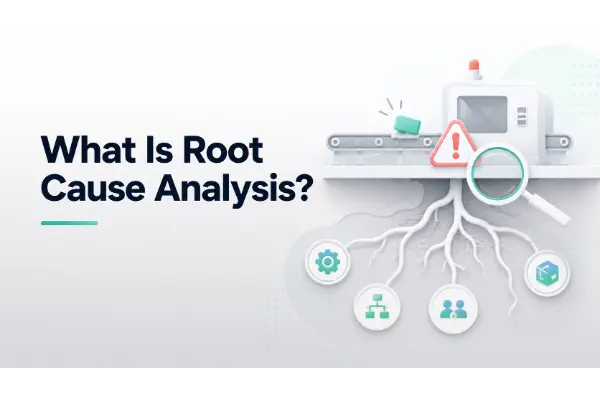
Root cause analysis, usually shortened to RCA, is a structured way of finding the real reason a problem happened, rather than the symptom sitting on the surface, so the fix stops it returning instead of just clearing it for today. It treats a breakdown, defect, or delay as the end of a chain and works backwards to whatever started it.
The reason it matters is that most problems arrive with pressure attached. Something has stopped, people want production back, and the first plausible explanation gets accepted because it closes the loop fastest. Usually that explanation is operator error, the fix is to retrain the operator, and the same fault returns a fortnight later because the underlying cause never changed. RCA slows that jump from problem to solution just enough to get it right.
A handful of methods do most of the work. The 5 Whys asks why repeatedly, peeling back one layer at a time, and suits a narrow problem with a clear line of failure. A fishbone diagram works better when several things contribute at once, mapping causes across categories like people, method, machine, and material. Pareto analysis helps when there are too many problems to tackle, pointing at the few that cause most of the pain. No single one is best, and the strongest RCA methods are often layered, broadening the field before narrowing to a cause the evidence supports.
It helps to separate the analysis from the corrective action. RCA finds the cause; the corrective action is what gets done about it. A flawless investigation is wasted if the response doesn’t match the finding, which is how a control gap ends up answered with more training.
Where RCA fails is rarely the technique. It is stopping at the convenient answer, never checking whether the fix held, and leaving findings in a spreadsheet nobody reopens, so the same faults keep returning. It works when every investigation lands on evidence, becomes an owned action, gets an effectiveness check, and is recorded somewhere the patterns across shifts can actually be read.
EviView gives teams one place to capture issues at the source, run 5 Whys and fishbone investigations, assign corrective actions, and track them to closure, while surfacing recurring causes across every shift and site. Book a demo.
Written By:

Karol Dabrowksi, CEO
Karol Dąbrowski is the CEO of EviView, a digital daily management system used by leading manufacturing companies to improve efficiency, reduce downtime, and optimise production performance. With a strong background in manufacturing operations, Karol is focused on solving real-world shop floor challenges by enabling teams to turn operational data into actionable insights and unlock hidden capacity across their facilities.